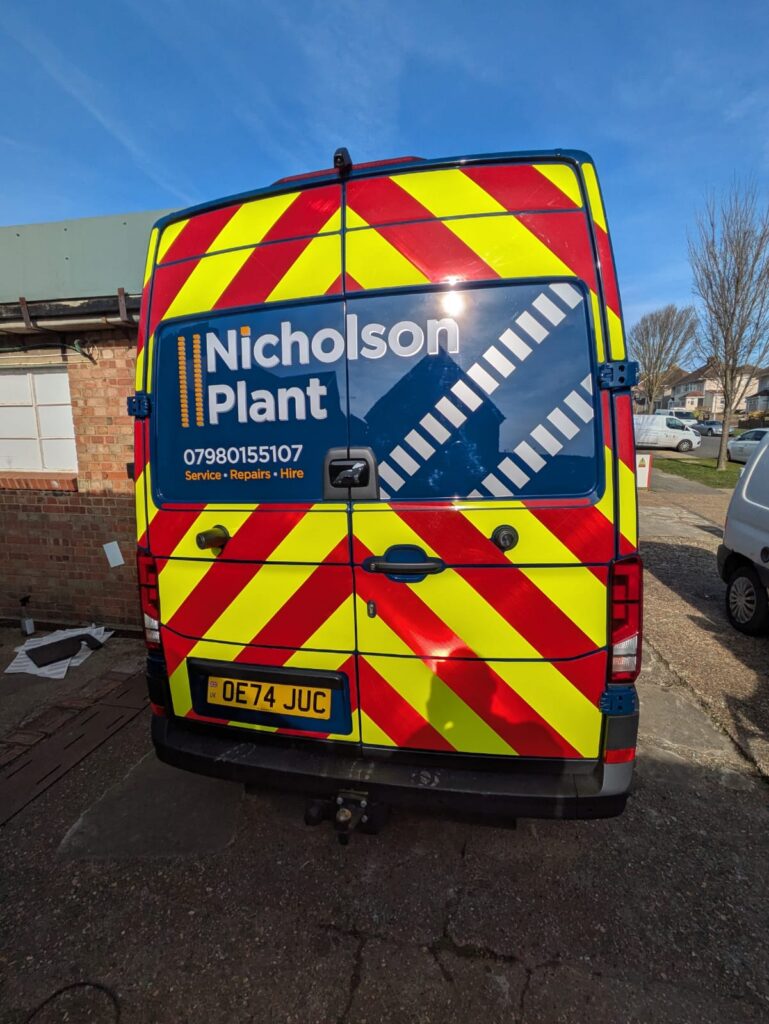
If your business operates vehicles on public roads, whether urban streets, rural routes or high-speed dual carriageways, it’s important to understand what Chapter 8 Rear Markings are and why these markings exist.
Even if your vehicles rarely work on motorways, the rules around visibility still apply, and the standards increase as road speeds rise.
At The Sussex Sign Company, we’re asked about this topic all the time by trades, contractors and local businesses. This guide breaks down exactly what chapter 8 rear markings you need on the rear of your vehicle and explains why they are so important for safety, compliance and liability.
What Is Chapter 8? A Quick Overview:
Chapter 8 is part of the UK’s Traffic Signs Manual. It provides best-practice guidance for companies operating vehicles on:
- Public highways
- Construction or maintenance sites adjoining highways
- Urban roads
- Rural routes
- High-speed dual carriageways and motorways
Although Chapter 8 itself is not law, it is widely treated as the expected standard by:
- National Highways
- Local authorities
- Utility companies
- Emergency and recovery services
- Major contractors
- Insurance companies
In practice, if your vehicle is working on the road network without the correct hi-vis markings, you could be:
- Removed from site
- Failed on an audit
- Considered negligent in the event of an incident
So although not formal legislation, Chapter 8 is the accepted industry benchmark, and failure to follow it can have serious consequences.
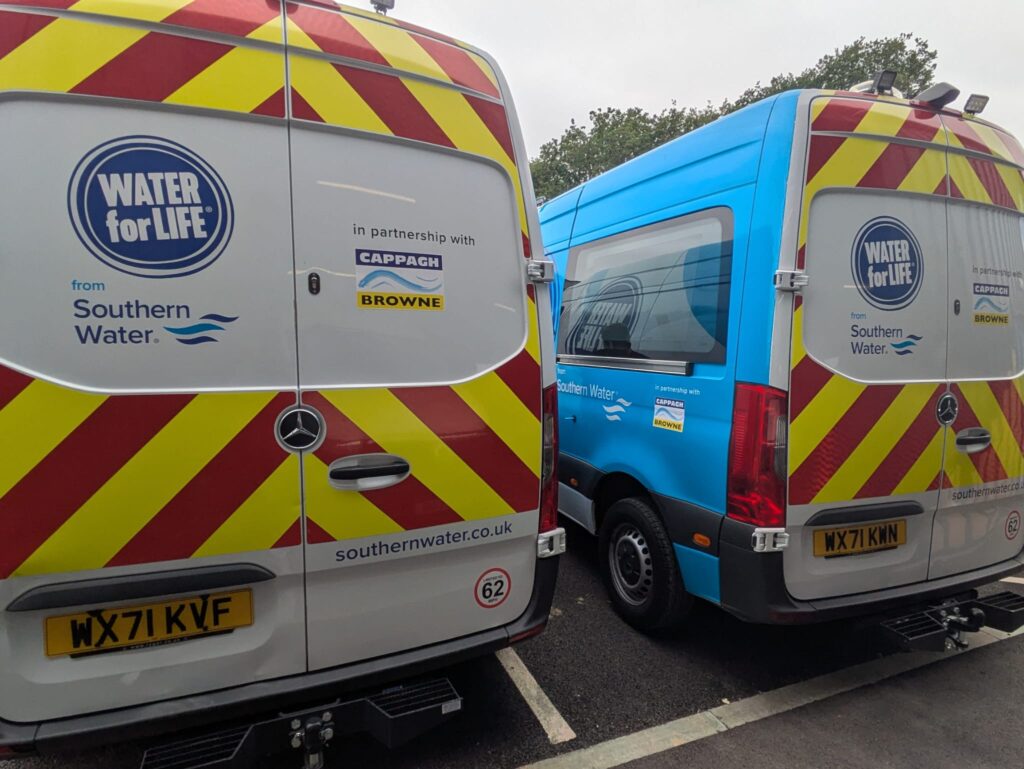
What Chapter 8 Rear Markings Are Required on Vehicles Working on Public and High-Speed Roads?
Below is the full list of elements expected under Chapter 8 for vehicles stopping, working, or moving slowly on any road, with additional requirements for high-speed environments.
1. High-Visibility Red & Yellow Chevron Markings
The most recognisable part of Chapter 8 is the rear chevron panel.
Specification
- Fluorescent yellow background (retro-reflective)
- Retro-reflective red diagonal stripes
- Stripes must be at least 150 mm wide
- Chevron pattern must point upwards
- Should cover as much of the rear as reasonably practicable
High-performance micro-prismatic materials are typically used for maximum visibility.
Why this is required
Vehicles on any road, but especially high-speed roads, need to be seen early. A driver travelling at 50–70 mph covers 22–31 metres per second!
Bright chevrons alert approaching drivers long before they reach the vehicle, which is essential in:
- Poor light
- Rain
- Fog
- Night conditions
- Low sun
Without this visibility, stationary or slow-moving vehicles present a major collision risk.
2. ‘HIGHWAY MAINTENANCE’ Text
Vehicles that work, stop or drive slowly on the public highway should display:
HIGHWAY MAINTENANCE
This text must be:
- Black
- Non-reflective
- Positioned prominently across the chevrons
Why this is required
The wording helps motorists instantly identify an authorised works vehicle, prompting safer behaviour:
- Speed reduction
- Lane adjustment
- Greater awareness
It also aids highways officers in identifying legitimate operations.
3. Additional Rear Conspicuity Markings (ECE104 Outline Tape)
While not mandated within Chapter 8, ECE104 reflective contour tape is commonly used to outline the rear of:
- Vans
- Tippers
- Luton bodies
- Trailers
- HGVs
Why this is recommended
At night or in low visibility, outline tape helps drivers judge:
- Size of the vehicle
- Position on the road
- Its distance away
This can reduce the risk of accidental impact.
4. Amber Warning Beacons
Vehicles working on any public road should be fitted with:
- Amber flashing beacons
- Visible from 360 degrees
These must be activated when:
- The vehicle is a potential obstruction
- It is moving slowly
- Roadside work is being carried out
Why this is required
Amber beacons are universally understood as a hazard signal and help approaching drivers recognise that extra caution is needed.
5. High-Performance Reflective Materials
Modern Chapter 8 standards expect micro-prismatic reflective films, which are much brighter than standard reflective.
Why this is required
Reflective materials ensure visibility from:
- Long distances
- Shallow approach angles
- Across multiple lanes on high-speed roads
They provide an added level of safety during night-time or low-light operations.
Why Chapter 8 Rear Markings Matter: The Safety Case
Chapter 8 exists for one purpose: to prevent collisions.
Here’s why the markings are so important on all public roads, and especially high-speed ones.
1. High speeds reduce reaction time
Even at 40 mph, a momentary distraction means travelling over 18 metres blind. On 60–70 mph roads, the margin for error is tiny.
Clear, bold markings prevent last-minute decisions and give drivers more time to react.
2. Visibility changes constantly
Weather and light conditions can quickly deteriorate.
Chapter 8 rear markings ensure your vehicle remains visible in:
- Rain
- Mist
- Fog
- Darkness
- Low winter sun
The combination of fluorescent and retro-reflective materials works both day and night.
3. Demonstrating legal duty of care
Employers must reduce risk as far as reasonably practicable.
Displaying Chapter 8 rear markings is a recognised way to demonstrate compliance with:
- Health & Safety laws
- Risk assessments
- Industry standards
If an accident occurs and markings were absent, liability may be questioned.
4. Contract and industry compliance
Many clients, from National Highways to local councils, specify Chapter 8-compliant vehicles as a condition of working on or near their roads.
Failure to comply can result in:
- Refusal to access site
- Failed audits
- Contract breaches
Summary: What Your Vehicle Needs Under Chapter 8
To operate safely and professionally on public roads, especially high-speed ones, your vehicle should have:
- Red/yellow Chapter 8 chevrons
- ‘HIGHWAY MAINTENANCE’ text
- Amber flashing beacons
- High-intensity reflective materials
- Optional but widely expected: ECE104 outline tape
These elements ensure your vehicle is:
- Highly visible
- Immediately identifiable
- Compliant with industry expectations
- Safer for both staff and the public
For more information or to get your vehicles Chapter 8 rear markings compliant contact us today.